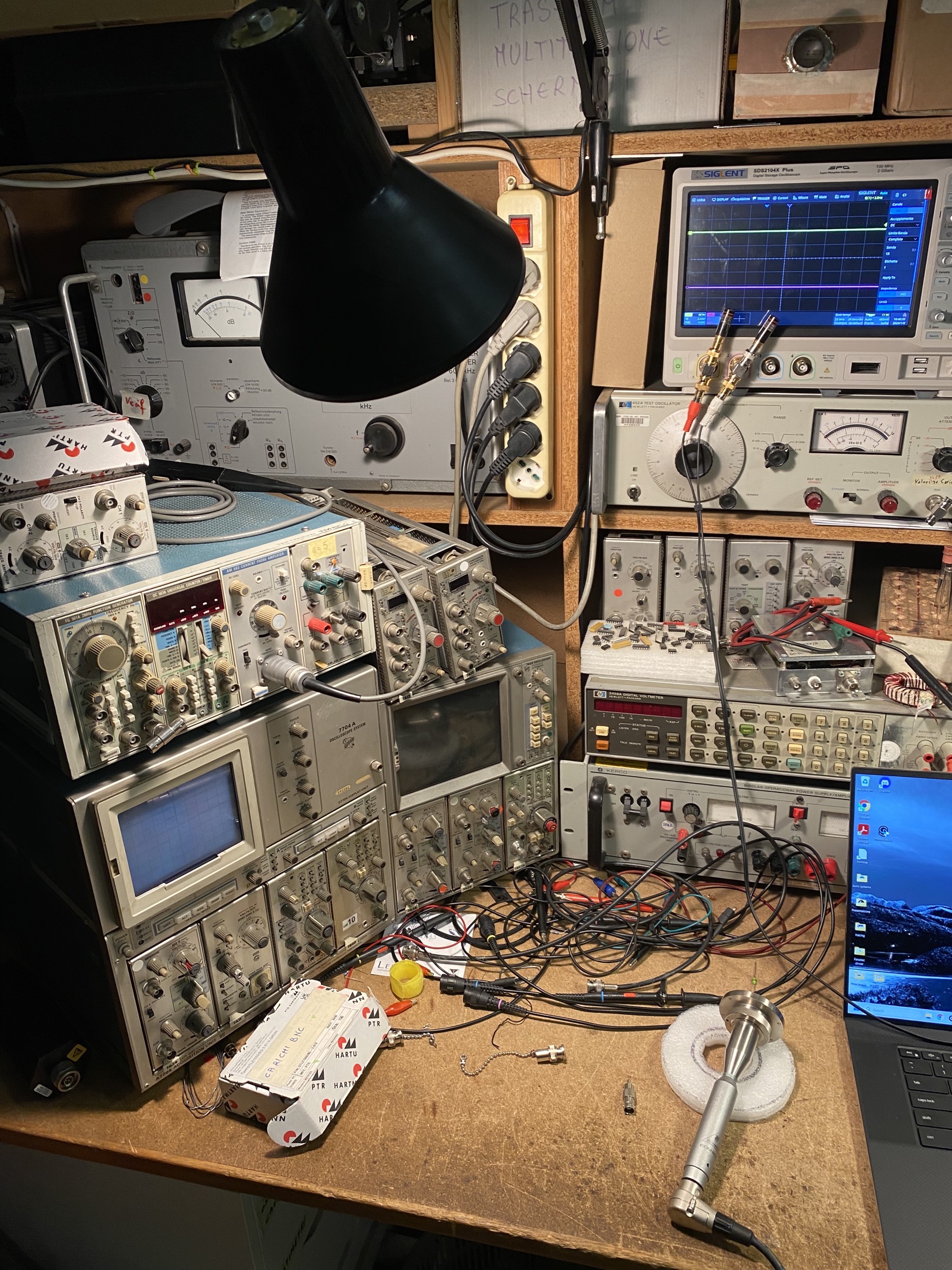
The useful part was turning technical curiosity into a structured curriculum.
Self-directed learning became a practical method for moving across three connected subjects: use mathematics to make problems precise, electrical engineering to test ideas against hardware, and signal processing to read what systems are doing.
The common thread is a learning loop: define the concept, build a small exercise around it, test the result, then document the next weak point.
Independent learner building a technical foundation through focused exercises, lab practice, and careful review.
Learning outside a clean preset path requires a clear sequence, visible evidence, and enough repetition to expose weak understanding.
A repeatable academic method that connects abstract problem solving with engineering systems and measured signals.
Chapter 01
Mathematics: building the structure before the shortcut.
Mathematics became the first chapter because it gives technical work its grammar. The priority was not memorizing methods, but learning to frame a problem cleanly enough that each step can be checked.
Translate a question into variables, assumptions, constraints, and a result that can be tested instead of guessed.
Keep transformations disciplined, track units and signs, and understand why a formula applies before using it.
Check answers against scale, boundary cases, and physical intuition so the solution is more than a finished line.
This chapter made later engineering work easier because the habit became explicit: model first, solve carefully, then verify the result.
Chapter 02
Electrical engineering: making the theory survive contact with hardware.
Electrical engineering became the second chapter because it forces abstract rules into real systems. Circuits, measurements, and faults made understanding visible.
Connect voltage, current, impedance, power, and components into a system that can be reasoned about before it is built.
Use instruments and notes to compare expected behavior with real behavior instead of relying on the first visible result.
Treat faults as information: isolate variables, test one assumption at a time, and document what changed.
This chapter turned engineering from a set of diagrams into a build-test-review habit grounded in evidence.
Chapter 03
Signal processing: learning to read systems through their behavior.
Signal processing became the third chapter because it sits between mathematics and electrical engineering. It turns measured behavior into patterns that can be filtered, compared, and interpreted.
Understand what is captured, what is lost, and how timing choices shape the signal before analysis begins.
Use spectra and transforms to see structure that is hidden in the time-domain trace alone.
Separate noise, trend, and useful content with enough care that the processing step does not invent a false answer.
This chapter linked the earlier two: mathematics provides the tools, electrical engineering provides the source, and signal processing makes the behavior legible.
Outcome
Self-directed learning became a three-part technical foundation.
The page belongs in the portfolio because it explains the method behind the current track: build mathematical discipline, test ideas through electrical engineering, and use signal processing to interpret measured behavior.
Problem framing, algebra discipline, calculus foundations, and verification habits.
Circuit logic, measurement routines, debugging, prototyping, and documentation.
Sampling, frequency analysis, filtering, and technical interpretation of real signals.